
language
Search Results:
Polyvinyl Chloride (PVC) sheets are among the most versatile plastics in the modern manufacturing, construction, and advertising industries. Known for their durability, chemical resistance, and ease of fabrication, they are the go-to material for everything from chemical tanks to retail point-of-sale (POS) displays.
However, buying the wrong type of PVC sheet can lead to ruined materials, wasted budget, and damaged machinery.
Whether you are sourcing plastic for industrial engineering or sign-making, this comprehensive guide will show you how to buy the right PVC sheets—and how to process them with maximum efficiency.

Key Factors to Consider When Buying PVC Sheets
Before you contact a plastic distributor, you need to understand the different classifications of PVC to ensure it fits your application.
1. Rigid PVC vs. Expanded PVC Foam Sheets
-
Rigid PVC Sheets (Type I & Type II): Extremely dense, hard, and chemically inert. These are highly resistant to impact and corrosion, making them ideal for chemical tanks, ductwork, and industrial cladding.
-
Expanded PVC Foam Sheets (Sintra/Forex): Lightweight, rigid, and slightly porous on the inside. This is the industry standard for advertising graphics, signs, exhibition booths, and custom retail displays.
2. Thickness and Dimension Tolerances
PVC sheets come in thicknesses ranging from $1\text{mm}$ to over $30\text{mm}$.
-
$1\text{mm}$ to $5\text{mm}$: Perfect for lightweight signs, indoor decals, and packaging prototypes.
-
$6\text{mm}$ to $15\text{mm}$: Ideal for freestanding displays, dimensional lettering, and structural barriers.
-
$15\text{mm}$ and above: Typically reserved for heavy industrial fabrication or outdoor architectural elements.
3. UV Resistance and Color Consistency
If your finished products will be placed outdoors, make sure to specify UV-stabilized PVC sheets. Standard PVC can yellow, become brittle, and crack under continuous exposure to sunlight. Buying UV-resistant grades ensures your graphics and structural components look pristine for years.
Common Sourcing & Processing Pitfalls to Avoid
Once you buy your PVC material, the real challenge begins on your production floor. Processing this material incorrectly is one of the biggest hidden costs in fabrication.
Why Lasers Are a Dangerous Choice for PVC
Many fabricators try to cut PVC sheets using CO2 laser cutters. This is a highly dangerous mistake.
-
When heated by a laser, PVC decomposes and releases hydrogen chloride gas, which is highly toxic to operators.
-
The gas combines with atmospheric moisture to form hydrochloric acid, which rapidly corrodes and ruins expensive laser optics and machine gantries.
-
The heat melts the edges of the PVC, leaving unsightly yellow charred residue that requires extensive manual post-processing.
How to Cut PVC Sheets Cleanly and Safely
To safely process both rigid and expanded foam PVC, professional manufacturers have transitioned away from lasers and manual saws to CNC mechanical flatbed cutters.
CNC Oscillating Knife Cutting: The Cold-Cutting Solution
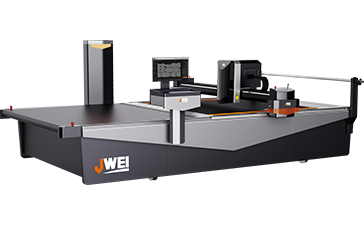
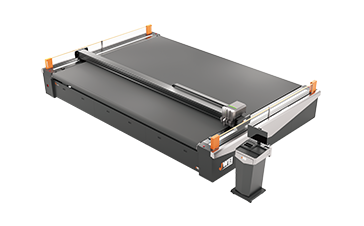
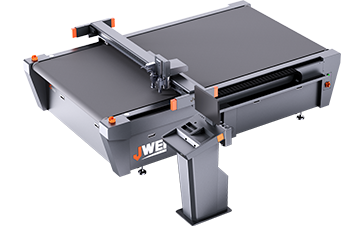
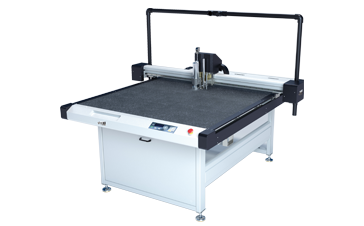
A digital flatbed cutting machine equipped with a high-frequency oscillating knife or a high-speed CNC router spindle is the safest and most efficient way to process PVC sheets.
-
No Toxic Fumes: Mechanical knives physically shear the material without heat, eliminating harmful gas emissions completely.
-
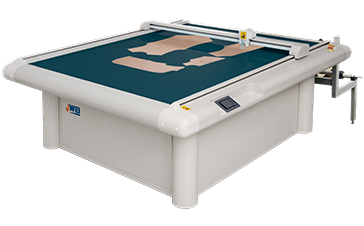
Impeccable Edge Quality: JWEI’s digital cutters deliver a flawless, burn-free "cold cut" edge that is immediately ready for assembly or shipping.
-
Contour Cutting Precision: Integrated CCD cameras scan printed graphics on PVC foam sheets, ensuring the cutting blade follows the printed contours with $100\%$ accuracy.
Streamline Your PVC Fabrication with JWEI
When buying PVC sheets, selecting the right material is only half the battle. To turn those raw plastic sheets into profitable, high-end finished products, you need a reliable, automated cutting workflow.
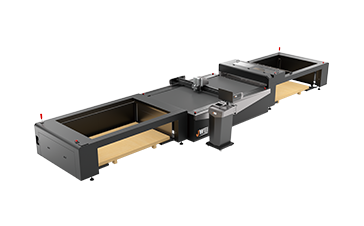
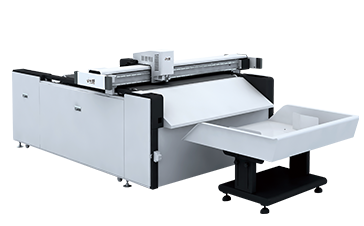
With the JWEI SC1625 digital cutting system, you can automate the entire feeding, cutting, and sorting process of expanded PVC sheets up to $1.6\text{m} \times 2.5\text{m}$.
If you are ready to eliminate manual cutting bottlenecks and toxic laser hazards, discover JWEI’s digital cutting solutions or contact our experts for a free PVC material cutting demonstration today.